Montessori classrooms are built around individual pace and observation from the start, which naturally accommodates a wide range of learning styles and needs — often catching and supporting differences earlier than a traditional, one-size-fits-all classroom would.
Every parent eventually asks some version of the same question: “Is my child on track?” It’s a fair question, but Montessori starts from a different premise entirely — there’s no single track. Children develop at different rates across different areas, and a strong classroom should flex to meet them, not the other way around.
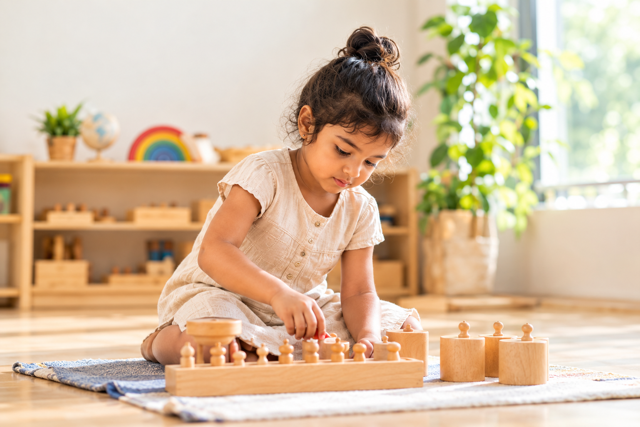
In a traditional classroom, thirty children often move through the same lesson at the same time. In a Montessori classroom, each child works with materials matched to where they currently are — one child might be deep in early phonics while another beside them is working with more advanced mathematics materials. This isn’t a formal “programme” so much as the everyday design of the room.
For a child who needs more time with a concept, that time is simply available, without the social pressure of visibly “falling behind” the group. For a child who’s ready to move faster, there’s no need to wait for classmates to catch up.
None of these automatically mean something is wrong — but raising them early gives everyone more room to figure out what support, if any, might help.
The goal isn’t to label children early — it’s to notice what each child needs and respond to it, whether that’s more time, a different approach, or additional support from a specialist. That responsiveness is baked into how Montessori classrooms are designed to run, not an extra service bolted on.
Does Montessori work well for children with learning differences?
Many families find the individualised pace and hands-on materials genuinely helpful, though every child is different — a conversation with your child’s teacher is the best starting point.
Will I be told if my child needs extra support?
Yes — our teachers aim to raise any concerns early and collaboratively, so you’re never caught off guard.
Can outside specialists work alongside the classroom?
Absolutely. We’re happy to coordinate with therapists or specialists supporting your child outside of school hours.
If you have questions about your child’s individual progress, our teachers are always happy to set up a time to talk.